
Training on agroecology and composting with rural entrepreneurs, in Kef, Tunisia
May 19th, 2026
On 13 May 2026, a training session dedicated to agroecology and composting was held in Kef, on the premises of an agricultural enterprise. Organised as part of the TRACE PADEO Project, it brought together rural entrepreneurs supported by the project around a key issue: improving the management of natural resources in order to develop sustainable agricultural investments.
Funded by the Government of the Netherlands through the World Bank and implemented by Microfinanza in collaboration with UTSS, TRACE PADEO supports rural entrepreneurs in Kef and Siliana in establishing viable, sustainable agricultural activities that generate employment.
Concrete practices to preserve soils
The training addressed the principles of agroecology, the preservation of biodiversity, and the central role of organic matter in soil fertility. In a context marked by land degradation and the effects of climate change, these practices represent an important lever for strengthening the resilience of farms in Tunisia.
An estimated 95% of land in Tunisia is degraded. This warning highlights the urgent need to restore soil fertility and improve the management of natural resources.
The discussions focused in particular on the gradual depletion of soils, linked to both human and climatic factors, as well as on the need to better protect natural resources. Biodiversity, often weakened by intensive agricultural practices and environmental change, was also at the heart of the discussions.
Particular attention was given to composting. Although still little used in Tunisia despite its many benefits, this technique makes it possible to recover locally available organic materials, such as kitchen waste, fresh grass, or manure, in order to produce a natural fertiliser rich in nutrients and microorganisms. Composting also helps reduce the volume of household waste, improve the structure of clay and sandy soils, and promote water retention. These are all assets that can help farmers limit irrigation needs and strengthen the sustainability of their farms.
Smart farming: a dialogue between traditional knowledge and new technologies
Facilitated by trainer Maha Mouelhi, the session encouraged a dynamic dialogue among participants. The discussions covered traditional methods, practices already tested by farmers, water management in agriculture, and the contribution of new technologies, particularly soil moisture sensors.
The discussions also addressed several concrete challenges faced by agricultural entrepreneurs: sorting organic materials, adapting composting to small plots, the availability of the necessary resources, and the possibilities for gradual implementation according to the size, means, and objectives of each farm.
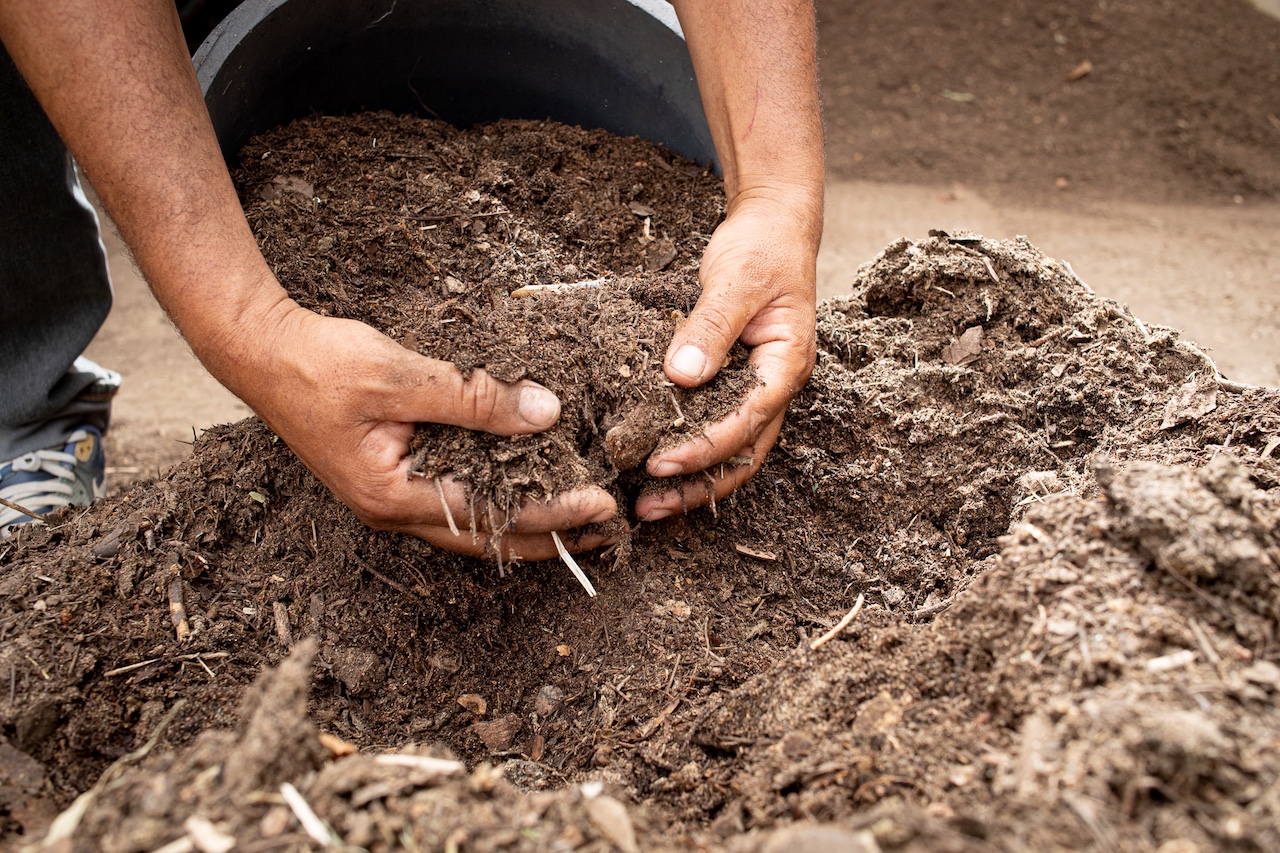
While the benefits of compost are generally known, its practical use remains limited. Among the participants, only two project promoters had a real understanding of how it works, and only one was already involved in installing a composting system on their farm. Several entrepreneurs showed particular curiosity and interest in this technique, considering the eventual setting of a composting station adapted to their activity.
This training day in Kef confirms the importance of close support in promoting agriculture that is more sustainable, more resilient, and better adapted to the realities of rural territories. It also highlights the need to create stronger links among farmers from different sectors and value chains in order to foster the exchange of experiences, complementarities, and collaboration. From this perspective, TRACE PADEO project also helps create a community space for dialogue and networking among rural actors who may be geographically close but had not yet had the opportunity to meet.
Further training sessions will be organised over the coming months as part of the TRACE PADEO Project.
The TRACE PADEO project, funded by the Government of the Netherlands through the World Bank and implemented by Microfinanza in collaboration with UTSS, supports rural entrepreneurs in Tunisia in developing sustainable, job-creating agricultural investments, through tailored technical and financial assistance that fosters local development and decent employment.
